
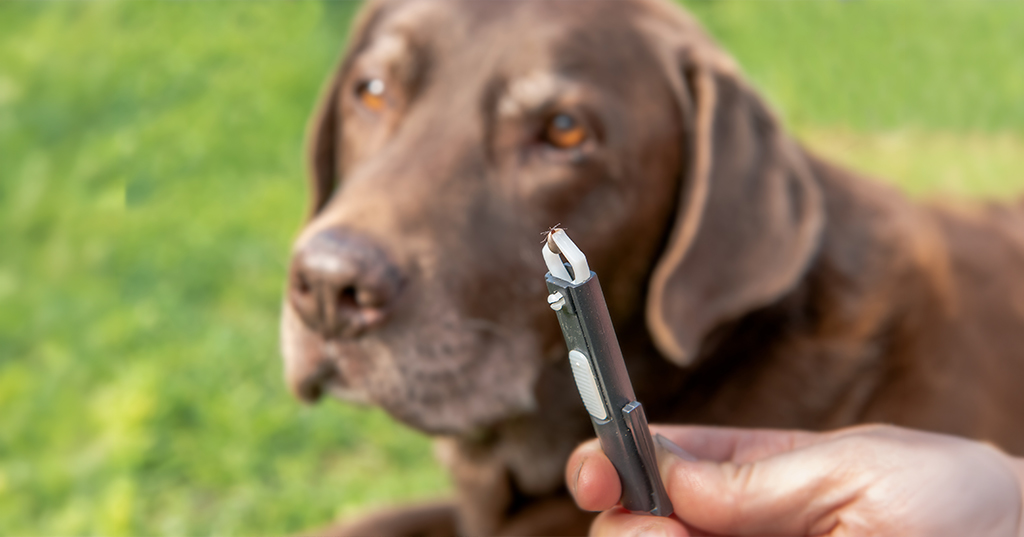
To remove a tick from a dog, grasp the tick as close to the skin as possible with fine-tipped tweezers or a tick removal tool, then pull straight up with slow, steady pressure without twisting or squeezing its body. Afterward, save the tick in a sealed container and watch your dog for any signs of illness in the weeks that follow. Ticks are a fact of life for dogs in southwest Ohio, and they show up on pets who hike the Little Miami Scenic Trail as well as those who rarely leave the backyard. Knowing how to remove a tick from a dog quickly and correctly matters, because the longer a tick stays attached, the greater the chance it passes along a disease. Our team at Loveland Regional Animal Hospital put together this guide to help local owners spot ticks, remove them safely, understand where they lurk, and protect their dogs all year long.
How Do I Know If My Dog Has a Tick?
Most ticks are found during a hands-on check, since dogs often show no reaction to a bite at first.
What a Tick Looks Like on Your Dog
Before feeding, many ticks are about the size of a sesame seed or smaller, and young ticks (nymphs) can be as tiny as a poppy seed. Once a tick latches on and fills with blood, it swells into a gray, tan, or bluish bump that some owners mistake for a skin tag or wart. Look closely for tiny legs near the skin. If you see legs, it is a tick.
Where to Check After Time Outdoors
Ticks prefer warm, protected spots with thin fur. Run your fingers slowly over your dog’s entire body after every walk, paying special attention to:
- Inside and around the ears
- Around the eyelids and muzzle
- Under the collar or harness
- In the armpits and groin
- Between the toes and paw pads
- Around the base of the tail
Subtle Signs Something Is Wrong
Some dogs scratch, lick, or chew at a spot where a tick has attached. You might also notice a small scab, a raised red area, or head shaking when a tick hides inside the ear. Feeling an unexplained bump during petting is often the first clue, so it pays to investigate any new lump you find. Dogs with thick or dark coats can hide ticks especially well, so a flea comb and good lighting help. Once you spot one, the next question most owners ask is how to remove a tick from a dog without hurting them.
How to Remove a Tick From a Dog, Step by Step
Removing a tick takes only a minute or two once you know the right technique, and staying calm helps your dog stay calm too.
Gather Your Supplies First
Have everything ready before you start: fine-tipped tweezers or a tick removal tool, disposable gloves, a small jar or zip-top bag with rubbing alcohol, and a few treats. A second person to hold and comfort your dog makes the process much easier.
The Removal Process
Follow these steps from the Centers for Disease Control and Prevention (CDC) for how to remove a tick from a dog:
- Put on gloves and part your dog’s fur so you can clearly see where the tick meets the skin.
- Grasp the tick with the tweezers as close to the skin’s surface as possible, holding the head or mouthparts rather than the swollen body.
- Pull straight upward with slow, steady, even pressure. Avoid twisting or jerking, which can cause the mouthparts to break off.
- Drop the tick into the container of rubbing alcohol and seal it. Label it with the date in case your veterinarian wants to identify it later.
- Wash the area gently with soap and water, then wash your hands thoroughly.
Mistakes to Avoid
Skip folk remedies such as smothering a tick with petroleum jelly, painting it with nail polish, or touching it with a hot match. These methods don’t work reliably, can irritate your dog’s skin, and may cause the tick to release more saliva into the bite. Never crush a tick with your bare fingers. If part of the tick stays in the skin, your dog seems painful, or the area becomes red and swollen over the following days, call your veterinarian rather than digging at the spot. If you feel unsure about how to remove a tick from a dog yourself, your veterinary team can do it for you.
Where Are Ticks Found Around Loveland?
Ticks live in more places than most people realize, and Ohio’s climate gives them a long active season.
Common Tick Habitats
Ticks wait on tall grass, brush, and leaf litter, then climb aboard as a dog brushes past. High-risk areas include wooded trails, overgrown fields, the edges of lawns where grass meets woods, and areas near creeks and rivers. Wildlife such as deer, raccoons, and mice carry ticks into suburban yards, so even a fenced backyard is not tick-free.
Tick Species in Southwest Ohio
Several tick species are active in our region:
- American dog tick: the most common tick on Ohio dogs, active mainly in spring and summer
- Blacklegged (deer) tick: the species that spreads Lyme disease, active even on mild winter days
- Lone star tick: an aggressive biter whose range is spreading north into Ohio
- Asian longhorned tick: an invasive species now confirmed in parts of the state
Tick Season in Ohio
Tick activity peaks from spring through fall, but adult blacklegged ticks stay active whenever temperatures rise above freezing. That means a sunny January walk can still bring a tick home. Because of this extended season, many veterinarians recommend year-round tick prevention for Ohio dogs. Hunting dogs, hiking companions, and pups who spend weekends at the lake face the highest exposure, and their owners benefit most from knowing how to remove a tick from a dog on the spot.
Why Should I Protect My Dog Against Ticks?
Ticks are more than a nuisance, because they can transmit serious diseases to dogs and, in some cases, to the people in your household.
Tick-Borne Diseases That Affect Dogs
Ticks in our area can carry several illnesses, including Lyme disease, ehrlichiosis, anaplasmosis, and Rocky Mountain spotted fever. Some dogs develop lameness, fever, swollen joints, lethargy, or loss of appetite days or weeks after a bite, while others show no outward signs for months. Certain ticks can also cause tick paralysis, a rare condition that improves once the tick is removed. Learning how to remove a tick from a dog promptly reduces the risk, since many diseases need the tick to stay attached for 24 to 48 hours before transmission occurs.
Signs to Report to Your Veterinarian
After any tick bite, contact your veterinarian if your dog shows limping, unusual tiredness, fever, a reduced appetite, or swelling around the bite. Your vet may recommend screening for tick-borne diseases during your dog’s annual exam, which can catch infections before symptoms appear. A common blood test checks for heartworm and several tick-borne diseases from a single small sample.
Protecting Your Family Too
Dogs can carry unattached ticks into your home, where those ticks may find a new host. Preventing ticks on your pet adds a layer of protection for everyone in the house.
Building a Year-Round Tick Prevention Plan
Knowing how to remove a tick from a dog is a valuable skill, but prevention is the best way to protect your pet. Veterinarian-recommended tick preventives come in several forms, including monthly chewables, topical treatments, and long-lasting collars. Your veterinarian can recommend the right product based on your dog’s age, size, health, and lifestyle. Some products sold online or in stores are less effective, and some made for dogs are toxic to cats, so check with your veterinary team before you buy. Pair a preventive with daily tick checks, a trimmed yard, and the Lyme vaccine if your vet recommends it. Loveland Regional Animal Hospital helps families across the Loveland area choose effective protection against ticks, fleas, and heartworms. Call us at (513) 697-9796 to set up your dog’s prevention plan.