
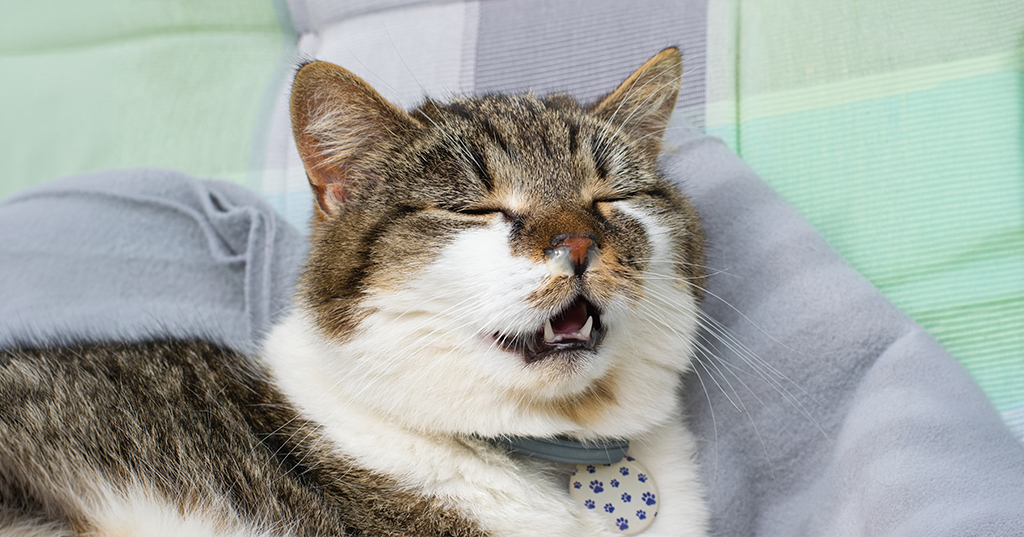
Bad breath in cats is most often a sign of dental disease, such as plaque buildup, gum inflammation, or tooth resorption, though kidney disease, diabetes, and oral infections can cause it too. A mild “fishy” smell after meals is normal, but a strong, persistent odor deserves a veterinary exam. Many cat owners assume stinky breath simply comes with age or a seafood-flavored diet. In reality, studies suggest that most cats over three years old show some degree of dental disease, and odor is often the first clue anyone notices. Because cats instinctively hide discomfort, a foul smell may be the only outward sign that something is wrong. At Loveland Regional Animal Hospital, we help Loveland cat owners uncover the reason behind unpleasant breath and build a plan for a healthier mouth. Here we’ll explain where the odor comes from, which warning signs to watch for, how veterinarians find the source, and what long-term care looks like.
What Causes Bad Breath in Cats?
Odor-producing bacteria are behind nearly every case of feline halitosis, but the reason those bacteria thrive can vary widely.
How Dental Disease Leads to a Smelly Mouth
After every meal, a sticky film called plaque forms on a cat’s teeth. Plaque is packed with bacteria, and within days it can harden into tartar (also called calculus) along the gumline. Those bacteria release sulfur compounds that create the sour, rotten smell owners notice. Over time, the infection creeps below the gums, causing gingivitis and eventually periodontal disease, which damages the tissues and bone that hold teeth in place. Dental problems account for the majority of bad breath in cats, which is why your veterinarian will usually start by examining the mouth.
Common Oral Conditions in Cats
Several mouth problems are especially common in felines:
- Periodontal disease: infection and inflammation of the gums and supporting structures
- Tooth resorption: a painful condition where the body breaks down a tooth from the inside out
- Feline chronic gingivostomatitis: severe, widespread inflammation of the gums and mouth lining
- Oral tumors: growths that can become infected and produce a strong odor
- Foreign objects: string, grass, or bone fragments lodged between teeth
Health Problems Beyond the Mouth
Sometimes the source of bad breath in cats lies elsewhere in the body. Kidney disease can create breath that smells like ammonia or urine. Uncontrolled diabetes may produce a sweet or fruity odor. Liver disease, respiratory infections, and gastrointestinal problems can also change how a cat’s breath smells. Because these conditions are serious, any unusual or sudden change in odor is worth a professional look.
What Are the Signs That Your Cat’s Breath Needs Attention?
Cats rarely show obvious pain, so subtle changes in behavior often accompany bad breath long before owners realize a problem exists.
Warning Signs in and Around the Mouth
Lift your cat’s lip gently during a calm moment, or watch while they yawn. Healthy gums look pink, and teeth should appear mostly white. Signs that point toward a dental problem include:
- Red, swollen, or bleeding gums
- Yellow or brown buildup along the teeth
- Drooling, sometimes with traces of blood
- Pawing at the face or mouth
- Chewing on one side or dropping food while eating
- Loose, broken, or missing teeth
Behavior Changes That Hint at Pain
Oral pain can change how a cat acts. Some cats become less interested in dry food, eat more slowly, or walk away from the bowl after a few bites. Others groom less, leaving a greasy or unkempt coat. You might notice irritability when someone touches their face, hiding, or less interest in play. These quiet changes often appear alongside bad breath in cats with advanced dental disease. Senior cats are especially good at masking discomfort, so owners sometimes mistake a painful mouth for normal aging or a picky appetite.
When to Call the Veterinarian Right Away
Schedule an exam promptly if your cat stops eating for more than a day, loses weight, drinks or urinates much more than usual, or has breath that smells sweet or like ammonia. Facial swelling, a growth in the mouth, or significant bleeding also needs quick attention. Cats who skip meals can develop serious liver problems, so appetite changes should never wait.
How Veterinarians Diagnose and Treat Feline Halitosis
Finding the true source of the odor is the first step, and the right treatment depends entirely on what your veterinarian uncovers.
The Oral Exam and Diagnostic Tests
Your veterinarian will begin with a physical exam and a look inside your cat’s mouth, checking the gums, teeth, tongue, and throat. Since many cats won’t allow a thorough look while awake, a full evaluation often happens under anesthesia. If the vet suspects a condition outside the mouth, bloodwork and a urinalysis can screen for kidney disease, diabetes, and liver problems that contribute to bad breath in cats.
Why Dental X-rays Matter
Roughly 60 percent of each tooth sits below the gumline, out of sight. Dental radiographs reveal hidden problems such as tooth resorption, root infections, and bone loss that a visual exam alone would miss. These images help your veterinarian decide which teeth can be saved and which need removal.
Professional Dental Cleaning and Treatment
For cats with dental disease, the main treatment is a professional cleaning under general anesthesia. During this procedure, your veterinary team removes plaque and tartar above and below the gumline, polishes the teeth, and examines each tooth individually. Painful or badly damaged teeth may need extraction, which often brings dramatic relief. When halitosis stems from another illness, such as kidney disease or diabetes, your veterinarian will recommend a care plan targeting that condition. Our veterinary team at Loveland Regional Animal Hospital will walk you through each recommendation before any procedure begins.
What Recovery and Long-Term Management Look Like
Most cats bounce back from dental procedures faster than their owners expect, and many seem more comfortable within days.
The First Days After a Dental Procedure
Your cat will likely go home the same day, possibly a little sleepy from anesthesia. Your veterinarian will provide specific discharge instructions covering food, medications, and activity. Follow those directions carefully and contact the clinic if you notice bleeding, swelling, or a refusal to eat. Owners often say their cat starts acting younger, playing more, and eating with new enthusiasm once mouth pain is gone.
Ongoing Care for Chronic Conditions
Dental disease tends to return without ongoing attention, and conditions like stomatitis or kidney disease require regular monitoring. Your veterinarian may suggest rechecks every few months or once a year depending on your cat’s needs. Paying attention to bad breath in cats between visits helps you catch any changes early. A returning odor is often the first sign that plaque is building up again or that another issue needs attention.
Questions to Ask at Follow-Up Visits
Follow-up appointments are a great chance to plan ahead. Consider asking how often your cat should have professional cleanings, whether any teeth need monitoring, and which at-home dental care products your veterinarian trusts. Your vet can also tell you whether any lab results should be rechecked. Bring notes about your cat’s appetite, grooming habits, and any lingering odor since the last visit. Details that seem minor at home often help your veterinarian decide whether bad breath in cats like yours points to returning dental disease or something new.
Preventing Bad Breath in Cats Before It Starts
The best defense against bad breath in cats is a combination of regular veterinary checkups and a home dental routine your veterinarian approves. Annual wellness exams let your vet spot early tartar, gum redness, or tooth resorption before they become painful. Many veterinarians also recommend daily tooth brushing with cat-safe toothpaste, dental diets, or treats that carry the Veterinary Oral Health Council (VOHC) seal. Starting these habits while your cat is young makes them easier to accept. Never use human toothpaste, which can be harmful to pets.
Loveland Regional Animal Hospital offers thorough feline dental exams and professional cleanings designed with your cat’s comfort in mind. Learn more about our pet dental care services, or call (513) 697-9796 to schedule an exam for your cat.