
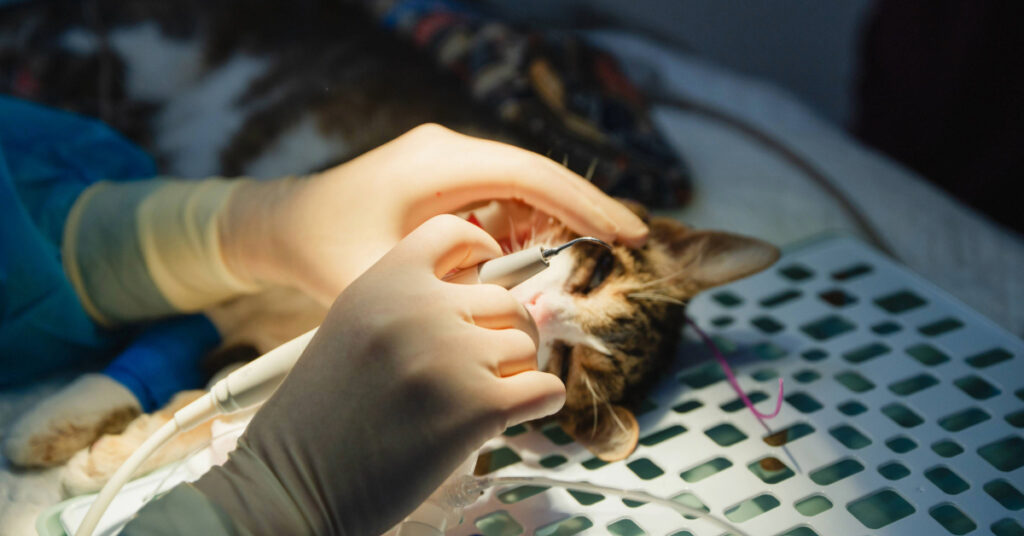
Cat teeth cleaning is one of the most important and most overlooked aspects of feline health care. Professional dental cleanings for cats remove dangerous tartar buildup, treat gum disease, and protect your cat from the painful oral conditions that develop silently over years. If you’ve been told your cat needs a dental cleaning and you’re wondering why it matters, this guide will walk you through everything you need to know.
Why Do Cats Need Professional Teeth Cleanings?
Cats need professional dental cleanings for the same fundamental reason humans do as plaque and tartar accumulate on the teeth over time, and no amount of at-home care fully removes it. For cats, this is compounded by the fact that feline dental disease often goes undetected for years. Cats are experts at masking pain, so a cat with severe gum disease may still eat, play, and appear perfectly normal from the outside.
Studies estimate that over 70% of cats show signs of dental disease by age 3. At Loveland Regional Animal Hospital in Loveland, OH, our veterinary team sees the full spectrum of feline dental disease, from early gingivitis to advanced tooth resorption, and professional cat teeth cleanings are one of our most powerful tools for preserving our feline patients’ comfort and quality of life.
What Is a Professional Cat Teeth Cleaning?
A professional feline dental cleaning at Loveland Regional Animal Hospital is a thorough procedure performed under general anesthesia. It is far more comprehensive than anything that can be done at home or without anesthesia. Here’s what it involves:
- Pre-anesthetic bloodwork: Before any cat dental cleaning, your veterinarian will run bloodwork to assess organ function and confirm your cat is a safe anesthesia candidate.
- Comprehensive oral examination: With your cat comfortably sedated, the veterinarian examines every tooth and the surrounding structures, checking for fractures, resorptive lesions, pockets, and other abnormalities.
- Dental X-rays: Full-mouth radiographs allow the veterinarian to evaluate the roots and bone beneath the gumline, where the majority of feline dental disease hides. These are a critical part of any complete cat dental exam.
- Scaling and polishing: Ultrasonic scalers remove calcified tartar from above and below the gumline. The teeth are then polished to smooth the enamel surface and slow future plaque accumulation.
- Treatment of identified problems: If extractions, gum treatment, or other procedures are needed, they are performed at the same time.
Why Does Cat Teeth Cleaning Require Anesthesia?
Anesthesia-free cat dental cleanings are marketed as a safer alternative, but veterinary dental specialists consistently advise against them. Here’s why anesthesia is essential for a proper cat teeth cleaning:
A Cooperative Patient Is a Safe Patient
Cats do not tolerate having their mouths held open, sharp instruments used near their gum tissue, or extended oral manipulation while awake. An awake cat in distress creates significant risk of injury to both the patient and the veterinary team and prevents the thoroughness that makes cat dental cleanings valuable in the first place.
Subgingival Cleaning Is Not Possible Without Anesthesia
The most disease-causing bacteria live below the gumline in the sulcus between the tooth and gum tissue. Cleaning this area safely and effectively requires the cat to be still, relaxed, and fully anesthetized. Anesthesia-free cleanings clean only the visible tooth surface, leaving the most dangerous bacteria untouched.
Dental X-Rays Require an Anesthetized Patient
Full-mouth dental radiographs are impossible to obtain in a conscious cat. Without X-rays, up to 60% of dental pathology, including tooth root abscesses and resorptive lesions, goes undetected. These are painful conditions that require treatment, and they simply cannot be found without imaging.
Is Cat Dental Anesthesia Safe?
Anesthesia for healthy cats is very safe when administered and monitored by a trained veterinary team. At Loveland Regional Animal Hospital, we use pre-anesthetic bloodwork, IV fluid support, continuous vital sign monitoring, and individualized anesthetic protocols to maximize the safety of every patient during their dental cleaning procedure.
The risk of a properly conducted anesthetic procedure is far lower than the risk of allowing untreated dental disease to progress. Chronic oral bacteria in cats have been linked to kidney disease, heart disease, and systemic inflammation, making the case for cat dental care even stronger.
What Are the Signs That Your Cat Needs a Dental Cleaning?
Because cats hide pain so effectively, many cat owners are surprised to learn their cat has significant dental disease. Some signs to watch for include:
- Bad breath that persists as a healthy cat’s breath should not be notably offensive
- Yellow or brown tartar buildup on the teeth, especially near the gumline
- Red, swollen, or bleeding gums (gingivitis)
- Drooling more than usual, or drool that appears bloody
- Dropping food, chewing on one side, or showing reluctance to eat hard food
- Pawing at the mouth or rubbing the face
- Weight loss (which can result from avoiding eating due to oral pain)
If you notice any of these signs, schedule a cat dental exam at Loveland Regional Animal Hospital right away. Dental disease is progressive. The sooner it’s treated, the better the outcome.
How Often Does My Cat Need a Professional Dental Cleaning?
How often your cat needs a professional dental cleaning depends on their individual oral health, genetics, diet, and at-home care routine. Many cats benefit from annual cat teeth cleanings. Some cats with a genetic predisposition to dental disease, particularly Siamese, Abyssinian, and other purebred cats, may need more frequent care.
Your veterinarian will assess your cat’s teeth at every wellness exam and recommend a cleaning schedule based on what they find. Don’t wait for obvious symptoms to develop because by then, significant disease has usually progressed.
Can You Clean Your Cat’s Teeth at Home?
Yes, and you should. Daily tooth brushing with a pet-safe enzymatic toothpaste is the single most effective at-home cat dental care method. It won’t replace professional cleanings, but it slows plaque accumulation between visits.
Other options that can support at-home feline dental care include dental treats, water additives, and dental gels with the VOHC (Veterinary Oral Health Council) seal. Ask the team at Loveland Regional Animal Hospital which products they recommend for your cat.
The Real Cost of Skipping Cat Dental Cleanings
Professional cat teeth cleaning costs are often a concern for pet owners. But the cost of untreated feline dental disease in terms of your cat’s pain, quality of life, and the eventual expense of treating advanced disease is considerably higher. A cat in chronic oral pain eats less, interacts less, and experiences diminished wellbeing every single day.
Cats with untreated dental disease also face a higher risk of tooth loss and systemic health complications. Preventive cat dental care, including regular professional cleanings, is almost always less costly than treating the consequences of neglect.
Your Cat’s Comfort Starts With Their Teeth
Professional cat teeth cleaning is not a cosmetic procedure. It’s a fundamental component of your cat’s overall health care, one that protects them from pain, preserves their teeth, and may add years to their life.
If it’s been a while since your cat had a dental exam, or if you’ve noticed any signs of oral disease, contact Loveland Regional Animal Hospital in Loveland, OH to schedule a feline dental consultation. Call (513) 697-9796 or book an appointment online today. Our compassionate team is here to help your cat feel their best from nose to tail.