
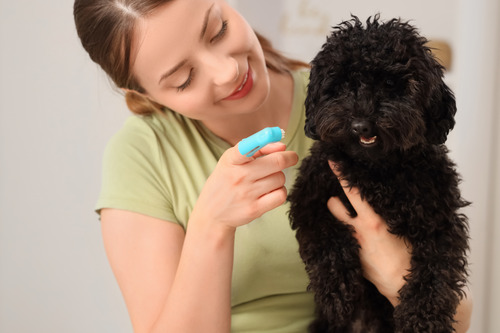
Brushing your dog’s teeth at home is one of the most effective ways to maintain their oral health and prevent dental disease. Learning how to brush dog teeth correctly helps reduce plaque and tartar buildup, freshen their breath, and support their overall comfort. While it might seem like a challenge at first, with the right tools, patience, and routine, you can make toothbrushing a simple part of your dog’s care routine. At Loveland Regional Animal Hospital, we want pet parents in Loveland, OH, to feel confident about caring for their pets’ teeth between professional cleanings. Below are five helpful tips on how to brush dog teeth effectively and safely.
Choose the Right Toothbrush and Toothpaste for Your Dog
Before learning how to brush dog teeth, start by gathering the right tools. Not every toothbrush or toothpaste is suitable for pets, so choosing products designed specifically for dogs is key to a positive experience.
Pet-Safe Toothpaste
Human toothpaste can contain ingredients like fluoride and xylitol, which are harmful to dogs if swallowed. Instead, use a dog-friendly toothpaste that’s flavored with chicken, beef, or peanut butter. These flavors help turn brushing into a more enjoyable experience for your pet.
Dog Toothbrush Options
Dog toothbrushes come in several types, including finger brushes and long-handled brushes. Finger brushes offer more control, while long-handled ones help you reach the back teeth more easily. Select a brush that fits your dog’s size and comfort level. Regularly replacing your dog’s toothbrush is also important. Aim to change it every three months or sooner if the bristles become frayed.
Start Slow and Make Toothbrushing a Positive Experience
When learning how to brush dog teeth, patience is essential. Most dogs need time to adjust to the sensation of having their teeth brushed, so start gradually to avoid making the process stressful.
Build Trust Step by Step
Begin by gently touching your dog’s muzzle and lifting their lips to expose the teeth without using a toothbrush. Reward calm behavior with praise or a small treat. Once they’re comfortable, introduce the toothpaste by letting them lick a small amount from your finger.
Next, use your finger or a soft cloth to rub along their gumline in small circles. Once your dog seems relaxed, introduce the toothbrush. Start with short brushing sessions (about 10–15 seconds per side) and gradually increase the time over several days.
Keep the Experience Rewarding
Make each brushing session positive by offering rewards afterward. Whether it’s gentle praise, playtime, or a favorite treat, your dog will begin associating brushing with good things.
Focus on Technique and Routine
Knowing how to brush dog teeth correctly matters just as much as doing it consistently. Proper brushing technique removes more plaque and helps protect your dog’s gums.
How to Brush Dog Teeth the Right Way
- Position your dog so you can easily reach their mouth.
- Hold the toothbrush at a 45-degree angle to the gumline.
- Use gentle, circular motions to clean the outer surfaces of the teeth.
- Pay special attention to the upper molars and canines, where plaque tends to accumulate.
You don’t need to brush the inside surfaces of the teeth. Your dog’s tongue naturally helps clean those areas. Focus on the outer surfaces for the best results.
How Often to Brush Dog Teeth
Daily brushing is ideal, but even brushing a few times per week can significantly improve your dog’s oral health. Set a schedule that works for your household and aim to brush at the same time each day to make it part of your dog’s routine.
Create a Calm Environment
The setting can make a big difference when teaching how to brush dog teeth. A calm environment helps your dog relax and reduces resistance.
Choose the Right Time and Place
Pick a quiet space free from distractions, such as other pets or household noise. Many dogs respond best to brushing after exercise or a walk when they’re naturally calmer.
Stay Calm and Patient
Dogs can sense your emotions. If you’re anxious or rushed, your pet may feel uneasy. Take your time, speak softly, and move slowly. If your dog shows signs of stress, stop and try again later rather than forcing the session. Consistency and patience will lead to better cooperation over time.
Support Dental Health Between Brushings
Even when you know how to brush dog teeth effectively, additional care helps maintain long-term oral health. Brushing should be part of a broader dental care routine that includes regular professional cleanings and dental-safe treats.
Dental Chews and Toys
Dental chews and toys designed to reduce plaque can complement brushing by scraping away buildup as your dog chews. Choose products approved by the Veterinary Oral Health Council (VOHC) for added peace of mind.
Professional Dental Checkups
Home brushing helps, but professional dog teeth cleanings at Loveland Regional Animal Hospital are essential for addressing tartar that brushing can’t remove. Schedule annual dental checkups with our team to monitor your pet’s oral health and detect early signs of dental disease.
Encouraging Lifelong Dental Health for Your Dog
Learning how to brush dog teeth takes time, but once you establish a routine, it becomes a simple, rewarding part of caring for your pet. Brushing your dog’s teeth at home strengthens the bond you share and contributes to their long-term comfort and well-being. Regular home care, combined with professional dental services, gives your pet the best protection against plaque, tartar, and oral pain. For personalized guidance or to schedule a dental checkup, call Loveland Regional Animal Hospital at (513) 697-9796 or book an appointment online today!